MOVE Endurance vs Cadence

  • By Tom Coughlin

Published: Wednesday, September 24th, 2026

Quick answer

MOVE Endurance and Cadence Energy Hydration are both strong options for athletes who want caffeine and electrolytes around endurance exercise, but they take different approaches.

Cadence is the simpler formula: 100 mg caffeine, 200 mg L-theanine and an electrolyte blend built around 500 mg sodium, giving it a strong hydration and cognitive-performance focus.

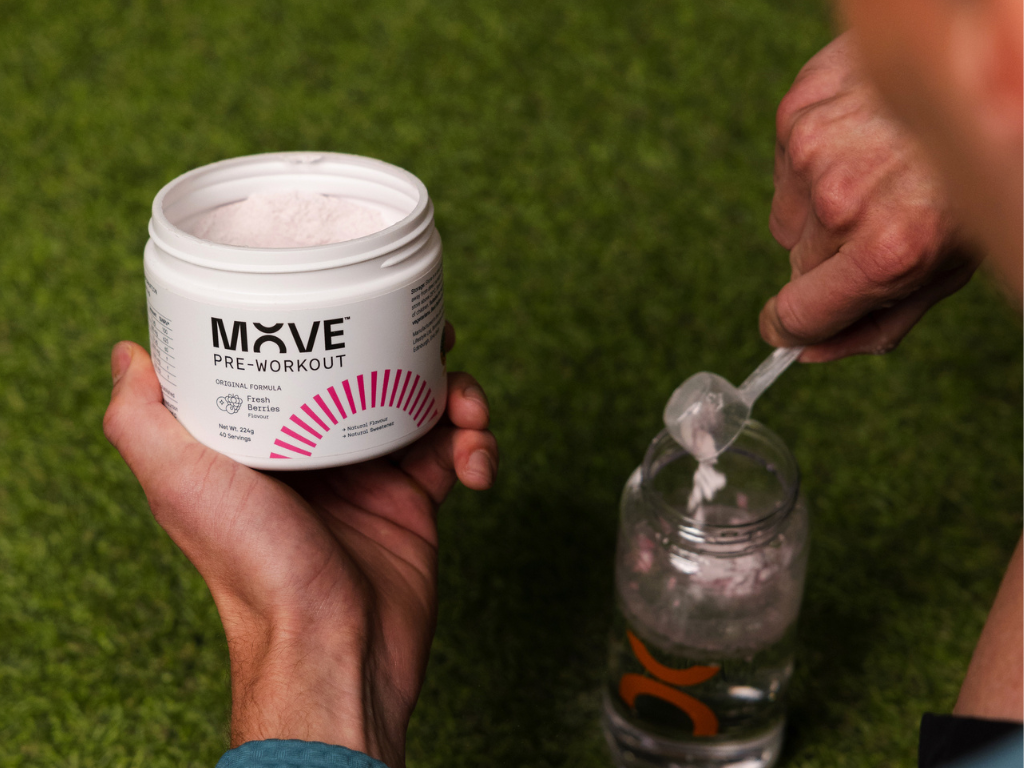
MOVE Endurance provides almost the same sodium dose but adds a higher 150 mg caffeine dose, 1.5 g taurine, 900 mg blackcurrant extract and 2 g L-arginine alongside sodium, chloride and potassium.[17]

Importantly, MOVE hasn’t ignored L-theanine. We use 400 mg in MOVE Decaf, where it makes more sense because I view it primarily as an ingredient for cognitive performance, concentration and calm alertness rather than a direct endurance-performance ingredient.[18]

If hydration and controlled cognitive stimulation are your main priorities, Cadence makes sense.

If you want a more complete endurance-specific pre-workout targeting perceived effort, muscular endurance, oxygen delivery, hydration and endurance performance, I’d choose MOVE Endurance.

MOVE Endurance

MOVE Decaf

Title

MOVE Endurance vs Cadence at a glance

Current MOVE and Cadence product information checked September 2026.

What is Cadence Energy Hydration?

Cadence is primarily a hydration brand rather than a traditional pre-workout company.

Its Energy Hydration sachet takes the brand’s electrolyte base and adds caffeine and L-theanine.

One sachet currently provides:

  • 500 mg sodium
  • 200 mg potassium
  • 20 mg magnesium
  • 100 mg caffeine
  • 200 mg L-theanine
  • Zero sugar

A 30-pack currently costs £34.99. Cadence positions it for energy and hydration before harder sessions, races or other situations where you want an additional lift.[19]

I actually like the simplicity of that.

There aren’t 15 ingredients competing for space in a small sachet.

You’ve got electrolytes, caffeine and a meaningful dose of L-theanine.

It’s easy to understand what the product is trying to do.

What is MOVE Endurance designed to do differently?

MOVE Endurance starts from a slightly broader question.

Rather than simply asking how we can combine hydration and caffeine, the formulation asks what an endurance athlete actually needs around a demanding training session.

One serving provides:

  • 150 mg caffeine
  • 1.5 g taurine
  • 900 mg blackcurrant extract
  • 2 g L-arginine
  • 500 mg vitamin C
  • 495 mg sodium
  • 726 mg chloride
  • 118 mg potassium

MOVE Endurance can be consumed 30–60 minutes before exercise or during prolonged training. The 30-serving tub currently costs £27.99, with individual sachets also available.[17]

The difference is really one of scope.

Cadence is primarily hydration plus cognitive stimulation.

MOVE is hydration plus a wider endurance-performance formula.

MOVE Endurance

Which gives you the better caffeine dose?

Both doses can work.

Cadence provides 100 mg caffeine, while MOVE Endurance provides 150 mg.

Caffeine is one of the most consistently effective endurance supplements available. It reduces perceived exertion, improves alertness and supports endurance performance.[1,2]

And you don’t necessarily need 300–400 mg to get those effects.

Research shows that lower caffeine doses can still improve exercise performance.[3]

That makes both products fairly sensible compared with the very high-stimulant end of the pre-workout market.

The difference is what I’d use them for.

If I’m going for an easier run, completing a moderate session or simply want a relatively small caffeine dose, 100 mg can be plenty.

If I’ve got intervals, a hard tempo run, a race or a demanding long session, I’d personally prefer the 150 mg in MOVE.

It still leaves room for additional caffeine later during a multi-hour event without front-loading a huge amount before the start.

Title

Does Cadence’s L-theanine make a difference?

This is one of Cadence’s clearest points of difference.

It combines 100 mg caffeine with 200 mg L-theanine, giving it a 1:2 caffeine-to-theanine ratio.[19]

Research on caffeine and L-theanine together is particularly interesting for cognitive performance.

Randomised trials have reported benefits to attention, task switching and subjective alertness when caffeine and L-theanine are combined.[4, 5, 6]

A more recent systematic review and meta-analysis also found that L-theanine with caffeine can improve some measures of cognition and mood, although the size and consistency of the effects differ between outcomes.[7]

That can still be useful during endurance sport.

A trail runner needs to concentrate on technical terrain.

A cyclist needs to maintain attention to traffic, positioning and the environment.

A team-sport athlete needs to keep processing information and making decisions as physical fatigue builds.

But this is where I’d make an important distinction.

I see L-theanine primarily as a cognitive-performance ingredient rather than a direct physical-performance ingredient.

That’s exactly why MOVE uses 400 mg L-theanine in its Decaf formula.[18]

MOVE Decaf is deliberately built around concentration, cognitive readiness, controlled mental energy and training later in the day without caffeine.

We didn’t include L-theanine in Endurance because that formula has a different job.

Endurance prioritises ingredients with a more direct relationship to the physical demands of prolonged exercise.

So I like Cadence’s caffeine-theanine combination.

I just see the theanine part as primarily supporting how you think and feel during the session, rather than directly improving endurance capacity itself.

How does MOVE approach fatigue resistance?

MOVE goes in a different direction by including 1.5 g taurine.

That reflects one of the most important differences between the products.

Cadence combines caffeine and L-theanine, giving it a particularly strong cognitive-performance angle.

MOVE Endurance combines caffeine with ingredients designed to address more of the physical demands of endurance exercise.

Taurine is involved in calcium handling, cellular regulation and muscular contraction.

A meta-analysis examining taurine doses between 1 and 6 g found improvements in endurance exercise performance, including following acute supplementation.[8]

That’s why taurine sits in MOVE Endurance while L-theanine sits in MOVE Decaf.

We’re not arguing that one ingredient is universally better than the other.

They have different jobs.

For a caffeine-free formula centred on concentration, calmness and cognitive readiness, 400 mg L-theanine makes sense.

For an endurance pre-workout centred on maintaining physical output, 1.5 g taurine is the more appropriate fit.

What is the role of blackcurrant in MOVE Endurance?

MOVE Endurance contains 900 mg blackcurrant extract.

This is another major difference between the formulas.

Blackcurrant is rich in anthocyanins and has become increasingly interesting in endurance nutrition because of its effects on vascular function, substrate metabolism and exercise performance.

Importantly, we have direct running-performance research using the same dose found in MOVE.

A randomised crossover study in trained runners found that an acute 900 mg dose of New Zealand blackcurrant extract improved 5 km running performance compared with placebo.[9]

Other research has reported improvements in cycling performance and fat oxidation following blackcurrant supplementation.[10,11]

That gives MOVE something Cadence doesn’t really attempt to provide.

Cadence is designed to hydrate you and provide controlled mental energy.

MOVE adds an ingredient with direct endurance-performance research at the dose included in the formula.

What about blood flow and oxygen delivery?

MOVE also provides 2 g L-arginine alongside 500 mg vitamin C.

L-arginine is a precursor to nitric oxide, which contributes to vasodilation and blood flow.

A systematic review and meta-analysis found positive effects of L-arginine supplementation across aerobic and anaerobic performance outcomes.[12]

Another meta-analysis found that L-arginine supplementation increased VO2 max in healthy adults.[13]

Vitamin C also supports endothelial function.[14]

For me, this is where the formulation starts to make more sense as a whole.

No individual ingredient has to do everything.

Caffeine targets alertness, perceived effort and endurance performance.

Taurine supports muscular function and fatigue resistance.

Blackcurrant supports vascular function and endurance performance.

L-arginine and vitamin C provide another pathway supporting blood flow and oxygen delivery.

The ingredients are targeting different parts of the endurance-performance problem.

Title

Which has the better electrolyte profile?

On sodium alone, there’s almost nothing between them.

MOVE Endurance provides 495 mg sodium.

Cadence provides 500 mg.

That is essentially the same dose.

Where they differ is the wider blend.

Cadence provides 200 mg potassium and 20 mg magnesium alongside its sodium.[19]

MOVE provides 118 mg potassium and 726 mg chloride alongside 495 mg sodium.[17]

MOVE’s electrolyte blend was deliberately informed by published measurements of the electrolytes endurance athletes actually lose through sweat.

Research in 157 marathon runners found average sweat concentrations of approximately:

  • 42.9 mmol/L sodium
  • 32.2 mmol/L chloride
  • 6.0 mmol/L potassium.[15]

When MOVE Endurance is mixed in approximately 500 ml fluid, it provides roughly:

  • 43 mmol/L sodium
  • 41 mmol/L chloride
  • 6 mmol/L potassium

The sodium and potassium concentrations are therefore remarkably close to the average concentrations measured in those marathon runners.

Interestingly, Cadence’s 500 mg sodium in 500 ml also works out at around 43.5 mmol/L sodium.

So both brands have landed in a very sensible place for sodium.

The difference is that MOVE’s sodium, chloride and potassium blend was formulated around the relative pattern of electrolytes commonly seen in endurance sweat, rather than focusing on sodium alone.

Title

Does that mean MOVE perfectly replaces your sweat losses?

No.

And I don’t think any sensible hydration product should suggest that one formula perfectly matches everybody.

The same marathon study demonstrates why.

Sweat sodium concentrations ranged from 7.0 to 95.5 mmol/L, while around 20% of runners had concentrations above 60 mmol/L.[15]

Sweat rate varies substantially as well.

One athlete might lose 500 ml per hour.

Another might lose more than a litre.

Your total sodium loss therefore depends on both how much you sweat and the concentration of sodium within that sweat.

The electrolyte formula should be seen as part of the hydration strategy rather than a universal replacement prescription.

For plenty of athletes, approximately 500 mg sodium provides a useful starting contribution.

Someone with particularly high sweat or sodium losses can add more.

Does the magnesium in Cadence give it an advantage?

Cadence provides 20 mg magnesium per sachet.

Magnesium is an essential mineral involved in neuromuscular function and numerous enzymatic processes.

But I wouldn’t choose between these two products based on 20 mg magnesium.

Acute exercise hydration is much more strongly influenced by fluid and sodium requirements, while magnesium needs should predominantly be addressed through overall dietary intake.

Its inclusion is perfectly reasonable.

I just don’t think it’s the deciding factor in this comparison.

What about carbohydrate?

Neither base product provides meaningful carbohydrate.

That’s useful because it gives the athlete flexibility.

For shorter sessions, you may not need carbohydrate during exercise at all.

For longer training, carbohydrate can then be added according to duration and intensity rather than automatically receiving the same amount every time.

MOVE does this through Carb Booster, which provides 30 g highly branched cyclic dextrin.

Cadence now has Fuel Mix, providing 25 g carbohydrate per scoop alongside 250 mg sodium.[20] Cadence currently uses a 2:1 glucose-to-fructose approach in this product.

So both companies are using a modular approach here.

You start with the hydration or performance base and then scale carbohydrate to the actual demands of the session.

I like that.

Which is better for a short run?

It depends on the run.

For a 30–45 minute easy session, neither product is essential.

If you simply want some hydration and a modest caffeine lift, Cadence is an elegant option.

You get 100 mg caffeine, electrolytes and L-theanine without a large number of additional ingredients.

For a hard interval session or tempo run, I’d lean towards MOVE Endurance.

The additional caffeine, taurine, blackcurrant and L-arginine create a broader performance formula for a session where maintaining output is actually important.

That’s the distinction I’d keep coming back to.

Cadence is a very good hydration-plus-energy formula.

MOVE is more deliberately designed as an endurance pre-workout.

Which is better before a long run?

MOVE Endurance would be my preference.

That’s partly because I’m thinking beyond the first 30 minutes.

The 150 mg caffeine dose provides a useful starting amount without being excessive.

Taurine supports fatigue resistance.

Blackcurrant adds an endurance-performance pathway.

The electrolyte profile contributes towards hydration.

And Carb Booster can then be added according to the carbohydrate requirement.

Cadence still works well before a long run, particularly for someone who prefers a lower caffeine dose or specifically values the caffeine-theanine combination.

But its focus remains more on hydration and cognitive stimulation.

MOVE attempts to cover more of the physical endurance demands within the base formula.

What about races?

Again, I’d generally choose MOVE.

A race is one of the situations where I want the whole formula to earn its place.

For shorter endurance events, caffeine, blackcurrant and fatigue resistance are all relevant.

For a marathon or ultra, I’m then layering that initial pre-workout into a much larger plan involving carbohydrate, fluid, sodium and potentially additional caffeine later.

This is where the 150 mg caffeine dose makes sense to me personally.

I get a useful dose before the start without using my entire caffeine strategy in one go.

Cadence’s 100 mg can also work extremely well, particularly for lighter athletes, more caffeine-sensitive athletes or people who simply prefer starting lower.

There’s nothing wrong with that.

Which is better for evening endurance training?

If we’re strictly comparing MOVE Endurance with Cadence Energy Hydration, Cadence has the lower caffeine dose.

But 100 mg can still affect sleep.

A systematic review and meta-analysis found that caffeine reduces subsequent total sleep time and sleep efficiency, with the effect influenced by dose and timing.[16]

If the session is late enough that sleep is genuinely a concern, I’d move away from both caffeinated products.

That’s where MOVE Decaf fits.

It provides no caffeine but includes 400 mg L-theanine, alongside L-tyrosine, CDP choline, Panax ginseng and other ingredients selected around cognitive readiness.[18]

That’s also another useful example of why we place theanine in Decaf rather than Endurance.

If cognitive support is the priority but caffeine isn’t appropriate, theanine has a clear role.

Which formula is simpler?

Cadence.

And that can absolutely be a strength.

Its Energy Hydration sachet effectively gives you three main things:

Electrolytes.

Caffeine.

L-theanine.

That makes the product easy to understand and easy to use.

There are plenty of athletes who don’t want or need anything more complicated.

MOVE Endurance is deliberately more comprehensive.

You’re adding taurine, blackcurrant, L-arginine and vitamin C because the intention is to influence more aspects of endurance performance.

Whether that’s an advantage depends on what you’re looking for.

For me, before an important endurance session, it is.

Which is more convenient?

This is close.

Cadence comes as individual sachets, so there’s nothing to measure. A 30-pack currently costs £34.99, or approximately £1.17 per serving.[19]

Cadence also offers ready-to-drink Energy Hydration cans containing 120 mg caffeine, 240 mg L-theanine, 500 mg sodium, 190 mg potassium and 30 mg magnesium for athletes who want a grab-and-go format.

MOVE gives you a choice between tubs and sachets.

The 30-serving Endurance tub is currently £27.99, or £0.93 per serving, while the 30-sachet pack is £32.99, or around £1.10 per sachet.

So if you mainly use pre-workout from home, the MOVE tub is the cheaper option.

If you compare sachet with sachet, the price difference is fairly small.

Which offers better value?

On ingredient breadth and cost per serving, I’d give this to MOVE.

The tub costs less while providing caffeine, electrolytes, taurine, blackcurrant extract and L-arginine.

Even MOVE’s individual sachets currently come in slightly below the Cadence 30-pack.

But value isn’t simply a contest to see who can put the most ingredients into a serving.

If all you specifically want is hydration plus 100 mg caffeine and L-theanine, Cadence provides exactly that.

You’re not paying for taurine or blackcurrant if those aren’t things you’re interested in.

That’s why I wouldn’t describe Cadence as poor value.

It’s a simpler proposition.

MOVE just gives you a broader endurance formula for slightly less money.

Which is better for drug-tested athletes?

Both are strong choices.

MOVE Endurance is Informed Sport approved, and Cadence states that its products are third-party tested through programmes including Informed Sport.[17,19]

That matters if you compete under anti-doping rules.

Independent batch testing reduces the risk of prohibited-substance contamination and provides a much higher level of assurance than simply reading the ingredient list.

From my perspective working with professional athletes, that’s essential.

I wouldn’t distinguish between the brands here.

Both have taken the appropriate approach.

Title

Who should choose Cadence?

Cadence Energy Hydration makes the most sense if you want:

  • A simple hydration-and-energy formula
  • 100 mg rather than 150 mg caffeine
  • A substantial 200 mg L-theanine dose
  • Approximately 500 mg sodium
  • A stronger cognitive-performance emphasis
  • Individual sachets
  • Zero sugar
  • Third-party testing
  • The option of ready-to-drink caffeinated hydration

It’s a well-designed product.

I particularly like it for someone who mainly wants hydration and controlled mental stimulation without a broader endurance pre-workout formula.

Who should choose MOVE Endurance?

I’d choose MOVE Endurance if you want:

  • A more complete endurance-specific pre-workout
  • 150 mg caffeine
  • Taurine for muscular function and fatigue resistance
  • 900 mg blackcurrant extract with direct running-performance research
  • L-arginine and vitamin C supporting blood flow and oxygen delivery
  • An electrolyte profile informed by published endurance sweat data
  • A choice of tubs or sachets
  • The ability to add Carb Booster for longer sessions
  • Informed Sport certification

It’s particularly well suited to hard runs, long runs, cycling, HYROX, conditioning and team-sport sessions where you want more than hydration and caffeine alone.

Tom’s Take

I actually think Cadence has done a good job here.

It’s not trying to pretend that 15 ingredients automatically make a better product. You’ve got hydration, 100 mg caffeine and 200 mg theanine. I can look at that label and immediately understand what it’s trying to achieve.

And I like the use of theanine.

We actually use twice that amount, 400 mg, in MOVE Decaf.

But that placement is deliberate.

I see theanine primarily as an ingredient for cognitive performance: concentration, attentional control and a calmer feeling of readiness. That’s why it makes sense in Decaf.

For Endurance, I wanted the additional ingredients to earn their place through the physical demands of the session.

That’s why taurine is there.

It’s why we use the 900 mg blackcurrant dose.

It’s why L-arginine and vitamin C are included.

And it’s why the sodium, chloride and potassium blend was built around what endurance athletes actually lose through sweat.

The interesting bit is that Cadence and MOVE end up in almost exactly the same place for sodium: roughly 500 mg.

So this isn’t really about one company understanding hydration and the other not.

The difference is everything around it.

If I want hydration and a modest caffeine lift with a strong cognitive angle, Cadence is a good product.

If I want a more complete pre-workout for endurance performance, I’d use MOVE.

Complete Endurance Setup

£49.98

Combine MOVE Endurance for hydration, stamina and energy with Carb Booster for clean, sustained fuel to power longer, harder sessions. Available in 3 flavours.

Flavour
Quantity